Dakota Language for Beginners Sunday, February 21, 2 pm

Feb 8th, 2010 Posted in ANNOUNCEMENTS | no comment »

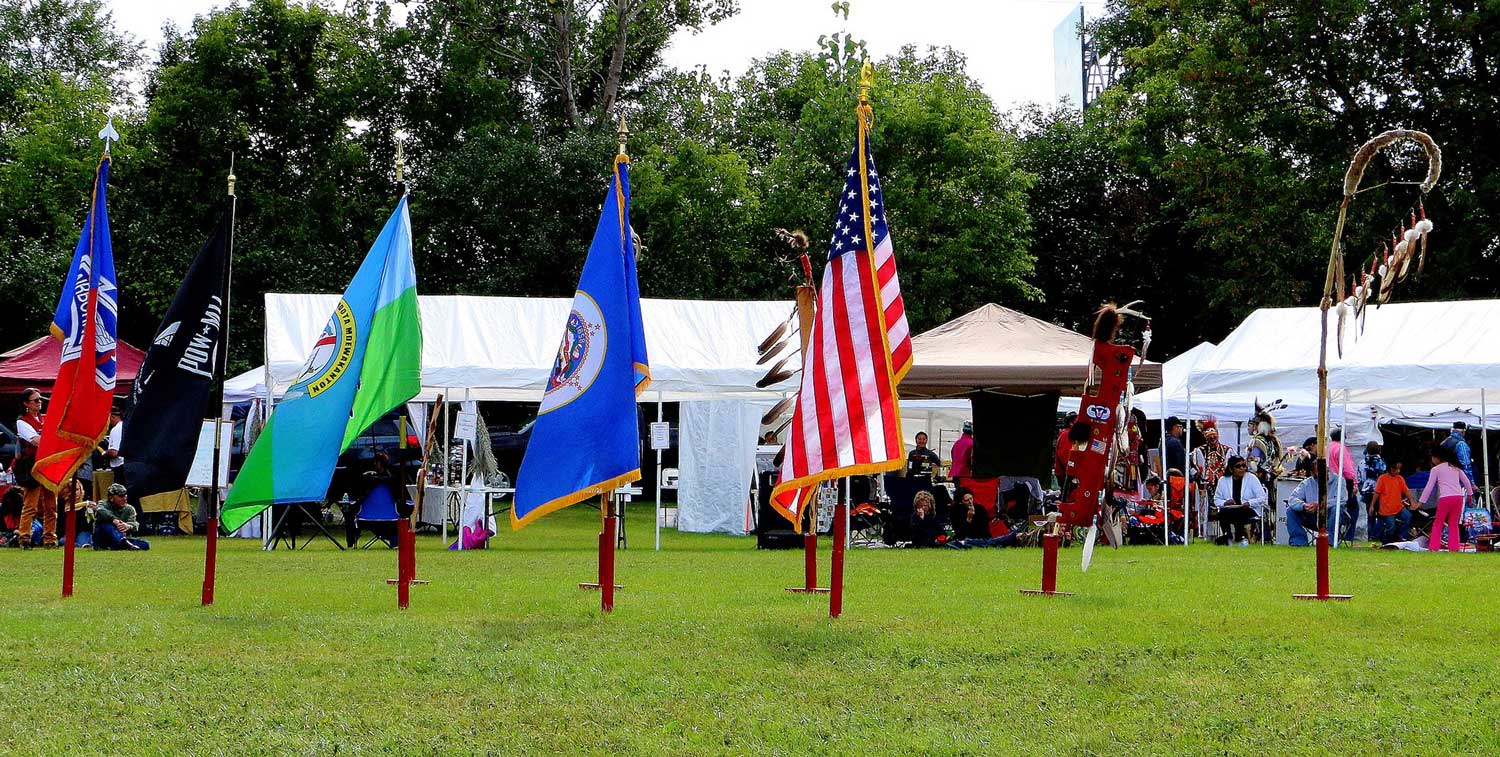
Learn to speak and write everyday words and phrases in Dakota – one of the original languages of Minnesota. Joe Bendickson, Dakota language instructor at the U of M, will lead this workshop, which is open to all ages. Children can take home a Dakota language activity book. Website resources and information on Dakota classes in the Twin Cities will be available. The first Dakota alphabet was devised by Gideon and Samuel Pond in 1834, and copies of 19th century documents will be on display. House tours at 1:30 and 3:30 p.m. Suggested donation $2. Pond Dakota Heritage Society members and youth through high school are free.

Maple Sugaring
Sunday March 7, Drop-In program, 2 – 4 pm
Native Americans produced maple sugar for centuries and passed on their knowledge to frontier settlers. Now you can experience maple sugaring for yourself! Outdoors, learn about choosing the right trees to tap, collecting the sap, and boiling it down to make syrup. Inside the house, watch syrup transform into sugar and sample maple candy. House tours 1:30 to 4:00 pm. Suggested donation $2. Pond Dakota Heritage Society members and youth through high school are free.

Pond Dakota Mission Park
401 East 104th Street (Between Nicollet and Portland Avenues)
Bloomington, MN

http://www.ci.bloomington.mn.us/main_top/2_facilities/rec_facility/pond/pondhous.htm

The Indian Reorganization Act of June 18, 1934

Feb 8th, 2010 Posted in HISTORY | no comment »

The Indian Reorganization Act of June 18, 1934, also known as the Wheeler-Howard Act or informally, the Indian New Deal, was a U.S. federal legislation which secured certain rights to Native Americans, including Alaska Natives.[1] These include a imagereversal of the Dawes Act’s privatization of common holdings of American Indians and a return to local self-government on a tribal basis. The Act also restored to Native Americans the management of their assets (being mainly land) and included provisions intended to create a sound economic foundation for the inhabitants of Indian reservations. Section 18 of the IRA conditions application of the IRA on a majority vote of the affected Indian nation or tribe within one year of the effective date of the act (25 U.S.C. 478). The IRA was perhaps the most significant initiative of John Collier Sr., Commissioner of the  Bureau of Indian Affairs from 1933 to 1945.

The act did not require tribes to adopt a constitution. However, if the tribe chose to do so, the constitution had to:

1. allow the tribal council to employ legal counsel;
2. prohibit the tribal council from engaging any land transitions without majority approval of the tribe; and,
3. authorize the tribal council to negotiate with the Federal, State, and local governments.

Evidently, some of these restrictions were eliminated by the Native American Technical Corrections Act of 2003.[2]

The act slowed the practice of assigning tribal lands to individual tribal members and reduced the loss, through the practice imageof checker boarding land sales to non-members within tribal areas, of native holdings. Owing to this Act and to other actions of federal courts and the government, over two million acres (8,000 km²) of land were returned to various tribes in the first 20 years after passage of the act.

In 1954, the United States Department of Interior began implementing the termination and relocation phases of the Act. Among other effects, termination resulted in the legal dismantling of 61 tribal nations within the United States.

This act was based upon the thought that tribes should be in existence for an indefinite period of time.[3]
[edit] Constitutional challenges

The Supreme Court has been asked repeatedly to address the constitutionality of the IRA. In 1995, the Eighth Circuit declared the IRA unconstitutional.[4] The U.S. Department of the Interior sought U.S. Supreme Court review. The DOI then implemented new regulations and asked the U.S. Supreme Court to remand the case to the lower courts to reconsider their decision based on the new regulations. The U.S. Supreme Court Granted the petition, vacated the lower court’s ruling and remanded the case back to the lower court. Justices Scalia, O’Connor and Thomas dissented and stated that "[t]he decision today–to grant, vacate, and remand in light of the Government’s changed position–is both unprecedented and inexplicable." imageand "[w]hat makes today’s action inexplicable as well as unprecedented is the fact that the Government’s change of legal position does not even purport to be applicable to the present case."[5] Seven months after the Supreme Court’s decision to grant, vacate, and remand, the DOI removed the land from trust. In 1997 the Tribe submitted an amended application to the Secretary, requesting that the United States take the land into trust on the Tribe’s behalf. The Eighth Circuit reexamined the constitutionality issue and affirmed the IRA’s constitutionality.

In 2008 Carcieri v Kempthorne was argued before the U.S. Supreme Court and was decided in 2009 as Carcieri v. Salazar[6]. In 1991, the Narragansett Indian tribe bought 31 acres of land. In 1998, the DOI agreed to take it into trust, exempting it from many state laws. The state believed that the tribe would open a casino or tax-free business on the land and sued to block the transfer, arguing that the IRA did not apply because the Narragansetts were not recognized by Congress as an Indian tribe until 1980.[7] The Supreme Court opined that the federal government could not place the Narragansett-owned 31 acres into trust because land was not recognized federally until after Congress passed the IRA in 1934.

In 2008, before the Carcieri opinion, in MichGO v Kempthorne, Judge Janice Rogers Brown of the D.C. Circuit Court of Appeals authored a dissent stating that she would have struck down key provisions of the IRA. Of the three circuit courts to address the IRA’s constitutionality, Judge Brown’s opinion is the only one to opine that the land-into-trust process violates the Constitution.[8] The U.S. Supreme Court did not accept the MichGO case for review. The First, Eighth and Tenth Circuits of the U.S. Court of Appeals have upheld the IRA’s constitutionality.[9]

imageMost recently, in a challenge to the U.S. Department of Interior’s decision to take land into trust for the Oneida Indian Nation, Upstate Citizens for Equality, New York State, Oneida County, Madison County, the town of Verona, the town of Vernon, and others argue that the IRA is unconstitutional.[10]
[edit] Outcome

The act proved to be successful in conserving the tribal land base. However, it did not prove to be successful to the same extent when it came to self governing of the tribes.[11]
[edit] Notes and references

1. ^ Indian Reorganization Act, Encyclopaedia Britannica
2. ^ Native American Technical Corrections Act, 2003, The Orator
3. ^ Canby, William (2004). "American Indian Law", p 24. ISBN 0314146407
4. ^ South Dakota v United States Dep’t of the Interior, 69 F.3d 878, 881-85 (8th Cir. 1995)
5. ^ Dep’t of the Interior v South Dakota, 519 U.S. 919, 919-20, 136 L. Ed. 2d 205, 117 S. Ct. 286 (1996)
6. ^ 555 U.S. ___ (Feb. 24, 2009)
7. ^ Carcieri at page 4 of opinion
8. ^ United States Court of Appeals for the District of Columbia Circuit MichGO v Kempthorne
9. ^ Carcieri v Kempthorne, 497 F.3d 15, 43 (1st Cir. 2007), overruled as Carcieri v. Salazar (U.S. Supreme Court); South Dakota v United States Dep’t of Interior, 423 F.3d 790, 798-99 (8th Cir. 2007); Shivwits Band of Paiute Indians v. Utah, 428 F.3d 966, 974 (10th Cir. 2005).
10. ^ Actual Complaint filed in court
11. ^ Canby, William (2004). "American Indian Law", p 25. ISBN 0314146407

[hide]
v • d • e
Rights of Native Americans in the United States
Trials
Cherokee Nation v. Georgia · Worcester v. Georgia · Standing Bear v. Crook · Hodel v. Irving · Cobell v. Salazar · Talton v. Mayes · Lone Wolf v. Hitchcock
Acts
Indian Intercourse Act · Civilization Act · Indian Removal Act · Dawes Act · Curtis Act · Burke Act · Indian Citizenship Act of 1924 · Pueblo Lands Act · Indian Reorganization Act · Oklahoma Indian Welfare Act · Indian Civil Rights Act · Alaska Native Claims Settlement Act · Indian Self-Determination and Education Assistance Act · American Indian Religious Freedom Act · Indian Child Welfare Act · Indian Gaming Regulatory Act · Indian Arts and Crafts Act · Native American Graves Protection and Repatriation Act · Native American Technical Corrections Act
Related
Public Law 280 · National Indian Gaming Commission · Native American gambling enterprises · Dawes Rolls · Bureau of Indian Affairs · Eagle feather law · Declaration of Indian Purpose

American Graves Protection and Repatriation Act

Feb 8th, 2010 Posted in FEATURED | no comment »

The Native American Graves Protection and Repatriation Act (NAGPRA), Pub.L. 101-601, 104 Stat. 3048, is a United States federal law passed on 16 November 1990 requiring federal agencies and institutions that receive federal funding[1] to return Native American cultural items and human remains to their respective peoples. Cultural items include funerary objects, sacred objects, and objects of cultural patrimony. In addition, it authorizes a program of federal grants to assist in the repatriation process. It is now the strongest federal legislation pertaining to aboriginal remains and artifacts.
Contents
[hide]

* 1 Background reasons
o 1.1 Tribal reasoning
* 2 Description
* 3 Origins
* 4 Historical context
* 5 Return to the Earth project
* 6 Kennewick Man controversy
* 7 International policy
o 7.1 Protecting cultural property
* 8 See also
* 9 Notes
* 10 Further reading
* 11 External links

[edit] Background reasons

There were many reasons from both Native American tribes and the United States Congress that served as the impetus for passing this legislation. NAGPRA addresses long-standing tribal claims and it applies exclusively to human remains and cultural objects. This human rights legislation is open to liberal interpretation: What is sacred? NAGPRA was enacted primarily at the insistence and by the direction of members of Native American nations.[2]
[edit] Tribal reasoning

Tribes had many reasons based in law that made legislation concerning tribal grave protection and repatriation necessary.

* State Statutory Law: Historically, states only regulated and protected marked graves. Native American graves were oftentimes unmarked and therefore did not receive the protection provided by these statutes.
* Common Law: The legal system that developed over the course of settling the United States was primarily formed by the colonizing population. This law did not often take into account the unique Native American practices concerning graves and other burial practices. This extended to not accounting for government actions against Native Americans such as removal, the relationship that Native Americans as a people maintain with their dead, and many myths surrounding the possession of graves.
* Equal Protection: Native Americans, as well as others, often found that Native American graves were treated differently than the dead of other races.
* First Amendment: As in many other racial and social groups, Native American burial practices relate heavily to their religious beliefs and practices. When tribal dead are desecrated, disturbed, or withheld from burial it can then be understood that religious beliefs and practices are being infringed upon. Religious beliefs and practices are protected by the first amendment.
* Sovereignty Rights: Native Americans hold unique rights as a sovereign body, leading to their relations to be controlled by their own laws and customs. The relationship between the people and their dead is an internal relationship, therefore one that is understood to be under the sovereign jurisdiction of the tribe.
* Treaty: From the beginning of the US government and tribe relations, a right was maintained by the tribe unless divested to the US government in a treaty. The US government therefore does not have the right to disturb Native American graves or their dead because it has not been allowed through a treaty.

[edit] Description

The Native American Graves Protection and Repatriation Act is a law that establishes the ownership of cultural items excavated or discovered on federal or tribal land after November 16, 1990. The act also applies to land transferred by the federal government to the states under the Water Resources Department Act.[3] However, the provisions of the legislation do not apply to private lands. The act states that Native American remains and associated funerary objects belong to lineal descendants. If the descendants cannot be identified, then those remains and objects, along with unassociated funerary or sacred object and objects of cultural patrimony belong to the tribe on whose lands the remains were found or the tribe having the closest relationship to them.[3]

Congress attempted to “strike a balance between the interest in scientific examination of skeletal remains and the recognition that Native Americans, like people from every culture around the world, have a religious and spiritual reverence for the remains of their ancestors.”[4]

The act also requires each federal agency, museum, or institution that receives federal funds to prepare an inventory of remains and funerary objects and a summary of sacred objects, cultural patrimony objects, and unassociated funerary objects. The act provides for repatriation of these items when requested by the appropriate descendant of the tribe. This applies to remains or objects discovered at any time, even before November 16, 1990.[5]

Since the legislation has been passed, the human remains of approximately 32 thousand individuals have been returned to their respective tribes. Nearly 670 thousand funerary objects, 120 thousand unassociated funerary objects, and 3500 sacred objects have been returned [5]. However, NAGPRA also serves as somewhat of a limitation, sometimes restricting excavation of Indian remains or cultural objects, therefore limiting the possible study of these objects.[6]
Map of Native American Reservations

The statute attempts to mediate a significant tension that exists between the tribes communal interests in the respectful treatment of deceased ancestors and related cultural items and the scientists’ individual interests in the study of those same interests. The act divides the treatment of American Indian human remains, funerary objects, sacred objects, and objects of cultural patrimony into two basic categories. Under the inadvertent discovery and planned excavation component of the act and regulations, if federal officials anticipate that activities on federal and tribal lands after November 16, 1990 might have an effect on American Indian burials—or if burials are discovered during such activities—they must consult with potential lineal descendants or American Indian tribal officials as part of their compliance responsibilities. For planned excavations, consultation must occur during the planning phase of the project. For inadvertent discoveries, the regulations delineate a set of short deadlines for initiating and completing consultation. The repatriation provision, unlike the ownership provision, applies to remains or objects discovered at any time, even before the effective date of the act, whether or not discovered on tribal or federal land. The act allows archaeological teams a short time for analysis before the remains must be returned. Once it is determined that human remains are American Indian, analysis can occur only through documented consultation (on federal lands) or consent (on tribal lands).

A criminal provision of the Act prohibits trafficking in Native American human remains, or in Native American “cultural items.” Under the inventory and notification provision of the act, Federal agencies and institutions that receive federal funds are required to summarize their collections that may contain items subject to NAGPRA. Additionally, Federal agencies and institutions must prepare inventories of human remains and funerary objects. Under the act, funerary objects are considered “associated” if they were buried as part of a burial ceremony with a set of human remains still in possession of the Federal agency or other institution. “Unassociated” funerary objects are artifacts where human remains were not initially collected by—or were subsequently destroyed, lost, or no longer in possession of—the agency or institution. Consequently, this legislation also applies to many Native American artifacts, especially burial items and religious artifacts. It has necessitated massive cataloguing of the Native American collections in order to identify the living heirs, culturally affiliated Indian tribes, and Native Hawaiian organizations of remains and artifacts. NAGPRA has had a dramatic effect on the day-to-day practice of archaeology and physical anthropology in the US. In many cases, NAGPRA helped stimulate interactions of archaeologists and museum professionals with Native Americans that were felt to be constructive by all parties.
Native American art objects on display at UBC’s Museum of Anthropology in Vancouver, Canada.
[edit] Origins

Maria Pearson is often credited with being the earliest catalyst for the passage of NAGPRA legislation, she has been called “the Founding Mother of modern Indian repatriation movement” and “the Rosa Parks of NAGPRA”.[7] In the early 1970s Pearson was appalled that the skeletal remains of Native Americans were treated differently than white remains. Her husband, an engineer with the Iowa Department of Transportation, told her that both Native American and white remains were uncovered during road construction in Glenwood, Iowa. While the remains of 26 white burials were quickly reburied, the remains of a Native American mother and child were sent to a lab for study instead. Pearson protested to Gov. Robert D. Ray, finally gaining an audience with him after sitting outside his office in traditional attire. “You can give me back my people’s bones and you can quit digging them up” she responded when the governor asked what he could do for her. The ensuing controversy led to the passage of the Iowa Burials Protection Act of 1976, the first legislative act in the U.S. that specifically protected Native American remains. Emboldened by her success, Pearson went on to lobby national leaders, and her efforts, combined with the work of many other activists, led to the creation of NAGPRA.[7][8] Pearson and other activists were featured in the 1995 BBC documentary Bones of Contention.[9]
[edit] Historical context

The late 19th century was one of the roughest periods in Native American history in regards to the loss of cultural artifacts and land. The collection of Native American cultural and ancestral assets was prompted by the founding of museums and the competition between them for artifacts as demand increased. This competition existed not only between museums such as the Smithsonian Institution (founded in 1846) and museums associated with Universities, but also between museums in the Untied States and museums in Europe. Collecting became hasty in the 1880s and 1890s and was often done by untrained adventurers. As of the year 1990 federal agencies reported having 14,500 deceased Natives in their possession which had accumulated since the late 19th century. Many institutions have claimed to have used the remains of Native Americans for anthropological research, such as comparative racial studies. Institutions such as the Army Medical Museum sought to demonstrate racial characteristics to prove the inferiority of Native Americans.[10]
[edit] Return to the Earth project

Return to the Earth is an inter-religious project whose goal is to inter unidentified remains in regional burial sites.[11] Over 110,000 remains that cannot be associated with a particular tribe are held in institutions across the United States, as of 2006.[12] The project seeks to enable a process of reconciliation between Native and non-Native peoples, construct cedar burial boxes, produce burial cloths and fund the repatriation of remains. The first of the burial sites is near the Cheyenne Cultural Center in Clinton, Oklahoma.[12][13]
[edit] Kennewick Man controversy

Compliance with the legislation can be complicated. One example of controversy is that of Kennewick Man, a skeleton found on July 28, 1996 near Kennewick, Washington. The Umatilla, Colville, Yakima, and Nez Perce tribes have each claimed Kennewick Man as their ancestor, and sought permission to rebury him. Kennewick, Washington is part of the ancestral land of the Umatilla.

Archaeologists claim that because of Kennewick Man’s great age, there is insufficient evidence to connect him to modern tribes. The great age[14] of his remains makes this discovery valuable scientifically, but archaeologists have determined that the man is of Native American origin.[15]
[edit] International policy

The issues that NAGPRA addresses have importance on the international stage as well. For example, in 1995 the United States signed an agreement with El Salvador in order to protect all pre-Columbian artifacts from leaving the region. Soon after, it signed similar agreements with Canada, Peru, Guatemala, and Mali and showed itself to be a leader in implementing the 1970 UNESCO Convention. The UNESCO convention saw its membership grow to 86 countries by 1997, and 193 by 2007. UNESCO seems to be having an impact on the illicit antiquities trade. While this is not an easy business to track, some stir among antiquities traders in the form of articles denouncing the agreements points to the positive effect these agreements seem to be having.[16]
Distinctive Marking of Cultural Property, Hague Convention

An international predecessor of the UNESCO Convention and NAGPRA is the 1954 Hague Convention for the Protection of Cultural Property in the Event of Armed Conflict.[17] The Hague Convention was the first international convention to specifically focus on preserving cultural heritage from the devastation of war.
Minik Wallace (Kalaallit) in New York, 1897

An example of the sort of acts done in the name of academia before any of these conventions and agreements occurred in 1897. On September 30, Lieutenant Robert Peary brought six Inuit people from Greenland to the American Museum of Natural History in New York to be placed on display as exhibits. About two weeks after arrival at the museum, all six of the Inuit people became sick with colds and fever. They began to perform their tribal healing process and were mocked for their bizarre behavior. These people became a form of entertainment for the Americans. By November 1, 1897, they were admitted to the Bellevue Hospital Center with tuberculosis. In February, the first Inuit died and shortly after that two more followed. By the time the sickness had run its course, there were only two survivors, one of whom, Minik, was adopted by a superintendent of the museum, while the other, Uissakassak, returned to his homeland in Greenland. Later, after being lied to and being told that his father Qisuk had received a proper Inuit burial, Minik shockingly found his father’s skeleton on display in the museum. In 1993, the museum finally agreed to return the four Inuit skeletons to Greenland for proper burial.
[edit] Protecting cultural property

In the US, the ARPA (Archaeological Resources Protection Act) protects archeological sites on federally owned lands, although sites owned privately are at the disposal of the owners. This organization buys archeological sites to conserve the cultural property located thereon. Other countries do not have an organization like this and their governments use three basic types of laws to protect their cultural remains.

Selective export control laws involve controlling the trade of the most important artifacts while still allowing some free trade. Countries that use these laws include Canada, Japan, and the United Kingdom.

Total export restriction laws are used by some countries to enact an embargo and completely shut off export of cultural property. Many Latin American and Mediterranean countries use these laws.

Many countries, such as Mexico, use national ownership laws to declare national ownership for all cultural artifacts. These laws cover control of artifacts that have not even been discovered yet.
[edit] See also

* American Indian Religious Freedom Act
* National Museum of the American Indian

[edit] Notes

1. ^ The Smithsonian Institution is exempt from this act, but rather must comply with similar requirements under the National Museum of the American Indian Act of 1989.
2. ^ Carrillo, Jo (1998). Readings in American Indian Law: Recalling the Rhythm of Survival Temple University Press, Philadelphia. ISBN 1-56639-582-8
3. ^ a b Canby Jr., William C. American Indian Law. St. Paul: West, 2004. Print. Page 276.
4. ^ [1]
5. ^ a b http://www.nps.gov/history/Nagpra/FAQ/INDEX.HTM
6. ^ Tom, Georgina. “NAGPRA – Overview and Controversy.” 12 Dec 2007. Web. 10 Nov 2009. .
7. ^ a b Gradwohl, D. M.; J.B. Thomson and M.J. Perry (2005). Still Running: A Tribute to Maria Pearson, Yankton Sioux. Special issue of the Journal of the Iowa Archeological Society. 52. Iowa City: Iowa Archeological Society.
8. ^ Peason, Maria D. (2000). “Give Me Back My People’s Bones: Repatriation and Reburial of American Indian Skeletal Remains in Iowa”. in G. Bataille, D.M. Gradwohl, C.L.P. Silet. Perspectives on American Indians in Iowa- An Expanded Edition. Iowa City: University of Iowa Press. pp. 131-141.
9. ^ “Bones of Contention”. British Broadcasting Corp.. 1995. http://www.bbcactive.com/BroadCastLearning/asp/catalogue/productdetail.asp?productcode=21733. Retrieved 01 December 2009.
10. ^ Carrillo, Jo, ed. Readings In American Indian Law. Temple University Press, 1998. Pg 169.
11. ^ “Return to the Earth”. Religions for Peace. http://www.return2theearth.org. Retrieved 2008-04-24. “Mission: The Return to the Earth project supports Native Americans in burying unidentifiable ancestral remains now scattered across the United States and enables a process of education and reconciliation between Native and Non-Native peoples.”
12. ^ a b “Return to the Earth”. Mennonite Central Committee. http://mcc.org/news/news/2006/2006-04-19_returntotheearth.html. Retrieved 2007-04-13.
13. ^ “Cheyenne Cultural Center”. City of Clinton, Oklahoma. http://www.clintonokla.org/entertainment/cheyennecenter.htm. Retrieved 2007-04-13.
14. ^ Custred, Glynn (2000). “The Forbidden Discovery of Kennewick Man”. Academic Questions 13 (3): 12–30. doi:10.1007/s12129-000-1034-8.
15. ^ McManamon, F.P. Kennewick Man. National Park Service Archeology Program. May 2004 (retrieved 6 May 2009)
16. ^ Messenger, Phyllis Mauch. The Ethics of Collecting Cultural Property Whose Culture? Whose Property? New York: University of New Mexico, 1999.
17. ^ http://www.icomos.org/hague/

[edit] Further reading

* Fine-Dare, Kathleen S., Grave Injustice: The American Indian Repatriation Movement and NAGPRA, University of Nebraska Press, 2002, ISBN 0-8032690-8-0.
* Jones, P., Respect for the Ancestors: American Indian Cultural Affiliation in the American West, Bauu Press, Boulder, CO. ISBN 0-9721349-2-1.

[edit] External links

* NAGPRA information from the National Park Service
o Summary of NAGPRA laws from the National Park Service

[hide]
v • d • e
Rights of Native Americans in the United States
Trials
Cherokee Nation v. Georgia · Worcester v. Georgia · Standing Bear v. Crook · Hodel v. Irving · Cobell v. Salazar · Talton v. Mayes · Lone Wolf v. Hitchcock
Acts
Indian Intercourse Act · Civilization Act · Indian Removal Act · Dawes Act · Curtis Act · Burke Act · Indian Citizenship Act of 1924 · Pueblo Lands Act · Indian Reorganization Act · Oklahoma Indian Welfare Act · Indian Civil Rights Act · Alaska Native Claims Settlement Act · Indian Self-Determination and Education Assistance Act · American Indian Religious Freedom Act · Indian Child Welfare Act · Indian Gaming Regulatory Act · Indian Arts and Crafts Act · Native American Graves Protection and Repatriation Act · Native American Technical Corrections Act
Related
Public Law 280 · National Indian Gaming Commission · Native American gambling enterprises · Dawes Rolls · Bureau of Indian Affairs · Eagle feather law · Declaration of Indian Purpose
Retrieved from “http://en.wikipedia.org/wiki/Native_American_Graves_Protection_and_Repatriation_Act”
Categories: 1990 in law | United States federal Native American legislation | Archaeology of the Americas | Art and cultural repatriation | Native American religion | Native American art

First Nations United: FIRE TALKS!

Feb 6th, 2010 Posted in FEATURED | no comment »

To
First Nations United: ensure the prosperity of the First Nation people and to bring about unification of all tribal nations through redefining our identity and connecting with our past!

FIRE TALKS!
Fire represents power, strength, life, and sustainability. First Nation people have used this life source in their ceremonies as a way of connecting us to the creator. Our ancestors gathered around fires and discussed many important issues that effected their tribe, community, and family. This connection to fire still remains for the First Nation people of Turtle Island. First Nations United would like to invite you to participate in FIRE TALKS! This is a bi-weekly intertribal gathering to develop a dialog about reclaiming the sacred site know as “Coldwater Spring.” Bring your ideas, history, and knowledge of this sacred site. We all share a common bond as First Nation people to the land of our ancestors, and to the future generation; let this bond unite us to reclaim this scared site for the Dakota Nation.
_________________________________________________________________________
Location/Logistics: Coldwater Spring is south of Minnehaha Park in Minneapolis. From Hwy 55/Hiawatha, turn east (toward the Mississippi River) at 54th Street, take an immediate right (south) & follow the frontage road for a half mile past the pay parking meters, through the fence gates, & past the aqua brick building where you can park. This gathering is outside so please dress appropriate for the elements. A fire will be provided and some refreshments.

When: 1st & 3rd Sunday of every month starting February 7th 5:00 pm – 6:00 pm

Contact: George spears Chi-Noodin (612) 269 -5083
Gary Spears Migizi (952) 974-3257

Resetting the Margins 6th Annual Conference on Women Offenders

Feb 6th, 2010 Posted in FEATURED | no comment »

April 9, 2010
University of Minnesota-Continuing Education and Conference Center
St. Paul, Minnesota

mar•gin•al•i•za•tion \ˌmärj-nə-lə-ˈzā-shən, noun
: The process of relegating an individual or group to an unimportant or powerless position within the larger society or group –Merriam-Webster’s Online Dictionary

This year, the Conference on Women Offenders will focus on examining different ways that women are marginalized beyond the experience of incarceration. Presenters will share examples of marginalization by ethnicity, social class, mental health, and sexual exploitation. Conference participants will identify strategies to effectively address these concerns.

Specific topics discussed and guest speakers include the following:

• Kathy Heltzer, School of Social Work, University of Minnesota Duluth – keynote speaker, moderator

• Lissa Jones, Executive Director of African American Family Services – Experiences of African American Women

• Suzanne Koepplinger, Executive Director of the Minnesota Indian Women’s Resource Center – Sexual Exploitation of Native American Women and Girls

• Jane Hurley-Johncox , School of Social Work, St. Catherine University and University of St. Thomas School, Reentry Legal Clinic Social Worker – Mental Illness and Women’s Reentry

Full details and brochures will be available on or after March 1 at www.mnmcca.com Cost of the conference is $60 and will be due by April 1.

21st Annual Cherokee County Mothers Day Pow Wow

Feb 1st, 2010 Posted in OTHER TRIBE POW WOW'S | no comment »

May 8th & 9th, Boling Park in Canton, Georgia

Sat. 11am-8pm/Sun. 11am-6pm

 image

Competition Pow Wow $ / Indian festival

All drums welcome / $ honorariums & feast

Iron man competition (fancy & grass)

Mcee: Chuck Benson

Head Judge: Bronson Haywahe

Headman and woman: (Honorable selection)

Re-enactments

Tipi encampments and competition

Primitive skills demonstrations

Warriors on horseback

Ray Pena (Birds of Prey)

Hoop dancers

Aztec dancers

Live buffalo (bison)

Native arts and crafts

Native foods/ gator tail, buffalo, fry-bread,

Pima wraps, roasted corn & Americana favorites

Kids activities

MUCH, MUCH, MORE


Admission:

Adults: $9

Kids: $5

kids 5 years & under: FREE


Rolling Thunder Enterprises

34 Rolling Thunder Drive

Jasper, Georgia 30143


image

www.rthunder.com

770-735-6275

rolling_thunder@earthlink.net

Finding a new Native voice as an Independent -Obama

Feb 1st, 2010 Posted in NEWS & POLITICS | no comment »

Written by Tim Giago (Nanwica Kciji) © 2010 Native Sun News Sunday, 31 January 2010 12:29

February 1, 2010

Like millions of other Americans I watched the State of the Union address by President Barack Obama almost as a moth drawn to a flame. I saw something afoot that I haven’t read about in the words of other columnists even though it was not something I expected.

Whenever the President made a point that may have been intended to draw the audience together, African American, white women and Democrats stood and cheered while their Republican counterparts sat on their hands.

The real problem with this is that

Read the rest of this entry »

State of Emergency – Pine Ridge Indian Reservation

Jan 26th, 2010 Posted in Pine Ridge | no comment »

A State of Emergency has been declared on the Pine Ridge Lakota “Sioux”
Indian Reservation. People have died. Many more people are at risk of
freezing to death. Another cold front is coming in, yet where is the
national media coverage?

Does the ‘Lacreek Electric Company’ – a non-Indian utility often thought
to be prejudice, care that people are suffering, since they are pulling
meters every day? (which is illegal throughout the rest of the u.s.
during the winter months).

What will Obama and the federal government do about this? While they dig
out Haitians, indigenous people right here may freeze to death. What are we going to do about it?

Help put this message out for help. The children and families of the Pine Ridge Indian Reservation need our help now. It is urgent that all 40,000 residents of the Oglala Nation have electricity and propane.

Call LaCreek toll free at 800-655-9324 or (605)685-6581 to see how you can
help pay into a customer’s account, example $5 into ten customers would
require a $50 donation by you. Tell LaCreek to make sure tanks are full
for ALL area residents between the months of November to March – and to
collect any delinquent payments between April and October.

Also, check out this non-profit to see if it is appropriate for you:
Arlene Catches The Enemy 605-867-5771 Ext 13.
Tax Deductable, Non-Profit (501-c-3). She can take credit cards over the
phone: Pine Ridge Emergency Fund, C/O Economic Development Administration
PO Box 669, Pine Ridge, SD 57770-0669

And call Lakota Plains Propane at 605-867-5199 and find out what homes have elderly or children and if they need money put down on their account to be
able to have a warm home tonight.

************ ******

List to assist Elders at Pine RidgeShare

Below are several Elders in the Kyle Community of Pine Ridge that are in immediate need of assistance. The contact information has been confirmed and permission has been granted to share their information with you.

There are several ways I will mention where assistance is needed and I’ll share here before I begin the information for where you can assist in paying for Propane for those who need it or to contact a local grocery store to pay for food for families who need this. Other ways of assisting the individual families will be listed with their contact information below.

To pay for propane for any individuals listed below use the information here and be sure to make your payment to the account of the individual(s) you choose to help. The propane company requires a minimum order of $120 of fuel before they will make a delivery to the individual. You can also pay for a persons propane and they will credit the individuals account so that when they do run out of any fuel they may have at the moment they can simply call and the company will deliver more.

Lakota Plains Propane (will take credit card)
Highway 407
Pine Ridge, SD 57770
605-867-5199
Be sure to request a receipt and use the contact for the person you are helping to call and followup to be certain they received the help you paid for.

Kyle Grocery (will take credit card)
Owner: Liz May
605-455-2824
Again be sure to follow up with the person you make a donation for to be sure they received the appropriate credit for purchasing food.

Elders in need are as follows:

Adolph Bull Bear
605-454-2190
He remains in need of continued assistance for propane, his son who is disabled lives with him and he is in need of food assistance which you can contact Kyle grocery (above) to make a donation for food. He will also need help with his electric bill.

Arlene Talks (age 72)
605-407-8243
She has a daughter and a granddaughter (age 7) who lives with her and is in need of propane and food assistance and you can contact the propane and grocery above to assist. You could also contact her for mailing address to send items for her granddaughter such as clothes, etc.

Janice One Feather (age 61)
605-455-2889
Mailing Address: P.O. Box 44, Kyle SD 57752
For Propane Delivery give House # 307
She has two grandsons living with her. Asa Steele age 7 and Dillon Westover age 9. You can mail donations for the two boys to the mailing address above for her and if you mail by fedex, UPS, etc use the house #307 Kyle SD 57752. She is in desperate need of food assistance and propane and you can use the info for propane and grocery companies above to pay for those items.

Donna Garnette
605-455-2527
605-441-7541
She has two grandchildren (Boy and girl), you can contact her for an address to offer assistance in clothes, etc for the children. She is in need of Propane and food assistance and you can use the info above for both companies to assist them with that.

Lilly Mae Red Eagle (age 88)
605-455-2612
Mailing address: P.O. Box 2, Kyle SD 57752
For propane delivery give House #HC2
She is in need of Propane and food assistance. You can use the info above for both companies to assist them with that. For deliveries by fedex, ups, etc use the house #HC2 Kyle SD 57752

Perlene Yellow Wolf (age 65 approx)
605-455-1458
She is in need of propane and food assistance. She lives with her daughter Crystal and three children. You can use the info above for both companies to assist them with that. They have a lot of problems with pipes freezing so if anyone in the immediate area could help with this that would be greatly appreciated.

May you be richly blessed for sharing your blessings with these elders and ensuring some relief to their suffering. Please help now as the need is immediate but please remember to help again in the future if you are able to as their needs are continual. Thank you in advance for sharing your love and helping these elders.

Raven Skye WinterHawk

A woman is like a tea bag: you never know how strong she is until she gets in hot water.
__._,_.___

Reply to sender |
Reply to group Messages in this topic (1)
Recent Activity:

* New Members 4

Visit Your Group Start a New Topic
American Indian Homeland Security “Fighting Terrorism Since 1492″
Support UNA, do your part on issues
www.UnitedNativeAmerica.com

MARKETPLACE

Going Green: Your Yahoo! Groups resource for green living

Switch to: Text-Only , Daily Digest . Unsubscribe . Terms of Use

.

__,_._,___

NON Indian State Run Casino in MN.? Could Be Coming Sooner Than You Think!

Jan 26th, 2010 Posted in NEWS & POLITICS | no comment »

Democratic gubernatorial candidate Mark Dayton considers starting a state run casino in the Twin Cities to raise money

Dayton says he would consider supporting a Twin Cities casino to raise money for Minnesota’s ailing budget, but not for a new Vikings stadium.

imageThe former senator says a metro-area casino would raise about $200 million a year, and would bring “much needed competition” to Mystic Lake Casino, the only tribally run casino in the Twin Cities area.

The Prior Lake casino is owned by the Shakopee Mdewakanton Sioux community.

Dayton says he wants to raise taxes on the wealthy, including tribal members who have received million-dollar casino pay-outs.

imageHe says the money would pay for services such as public schools.

Dayton talked about the idea at a wide-ranging Capitol news conference Monday.

The former U.S. senator says a metro-area casino would raise about $200 million a year.

He says such a facility would bring “much needed competition” to Mystic Lake Casino, the only tribally run casino in the Twin Cities. The Prior Lake establishment is owned by the Shakopee Mdewakanton  Sioux Community.

Dayton says he wants to raise taxes on the wealthy, including tribal members who have received million-dollar casino pay-outs. He says the money would pay for services such as public schools.

Dayton says he is not only considering a state-run casino but also tax increases on couples who make more than $150k.

After a news conference last week in which he ducked most reporters’ questions, DFL gubernatorial candidate Mark Dayton reappeared at the Capitol on Monday with more details about his campaign.

READ THE REST OF THIS STORY AND VIEW READER COMMENTS HERE:

Grant Writers needed URGENT.

Jan 22nd, 2010 Posted in FEATURED | no comment »

A message from The Mendota Mdewakanton Dakota Community. We need grant writers NOW. If you know of anyone, please have them call the office at 651-452-4141. Our email is mmdc01@comcast.net
More information coming next week about are struggle to keep the Mendota office open after June 1, 2010. Please help if you can.
The Mendota Tribal Council.

There have been 402602 hits since 7-14-09